We Provide Best Electrical Service.

LT Cable Laying
LT Cable Laying: Low Tension Cable Supplier in India.
LT cable laying involves installing low tension cables that carry electrical power from source points to industrial, commercial and infrastructure loads. Before cable laying starts, the route is assessed for existing utilities, soil conditions, site access and the appropriate installation method. Site conditions determine whether contractors use trenches, ducts or cable trays, while the installation team follows the specified depth, spacing and bending radius requirements during cable placement. During laying, technicians follow specified cable handling practices to minimize excessive pulling, sharp bends and physical damage. Teams use sand cushioning, protective covers and warning tapes to protect underground cables. Route markers and cable identification also make maintenance and fault tracing easier.
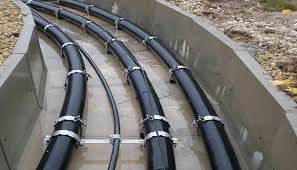
Once the cables reach their termination points, technicians carry out the necessary jointing and termination work and conduct the required tests before putting the electrical system into service. The cable type, site conditions and project requirements determine the laying method and installation arrangements. LT cable laying services cover manufacturing plants, commercial buildings, warehouses, utility areas and infrastructure developments. Underground cable laying suits locations where electrical cables need protection below ground. Within industrial and commercial premises, contractors can use trenches, ducts or cable trays according to site conditions and installation requirements. Proper LT power cable installation gives electrical distribution systems a planned route between power sources and connected loads.
Why Does Proper LT Cable Laying Matter?
Low tension cables carry power from distribution points to every motor, machine and load in an industrial facility. A cable that is undersized for its load, laid without adequate depth in a trench, bent beyond its minimum bending radius, terminated without proper lugs or routed without separation from signal cables will degrade faster, overheat under load and create the conditions for insulation failure and ground faults. In a manufacturing plant, a cable fault in a critical feeder can stop a production line. Underground cable damage from excavation - which is almost entirely preventable with correct depth, protective covers and route markers - causes extended outages. Proper LT cable laying is not a formality; it is the physical infrastructure that determines how reliably the electrical system performs for the fifteen to twenty years the cables will remain in the ground.
Case Study:
A private industrial company engaged Samka Electricals & Facilities Pvt Ltd for a LT cable laying assignment carried out in the Mumbai region. As an LT cable laying supplier in Badlapur, Mumbai, Maharashtra, the team installed low tension cables through planned routes covering approximately 450 metres, including trench sections and cable tray runs. The project included cable routing, placement and installation work according to the site requirements and project specifications.
Advantages:
- Organized Routing: Planned cable routes keep LT cable installation orderly, making the overall layout easier to follow and manage.
- Cable Protection: Proper trenching, ducting and protective covers provide physical protection and reduce the risk of cable damage during excavation.
- Space Efficiency: Cable trays and organized routing use available space well, reducing clutter in industrial plants and commercial buildings.
- Easier Maintenance: Proper cable identification and route marking make it easier for technicians to inspect cables and trace faults.
- Future Expansion: A planned cable layout leaves room for additional circuits and equipment as power requirements grow over time.
- Reduced Downtime: Well-organized cable laying lowers the chances of accidental damage during excavation or maintenance work nearby.
- Safer Operation: Correct installation practices reduce potential electrical hazards and make the completed cable installation easier to inspect.
Application Industries:
Automotive
Manufacturing
Pharmaceuticals
Chemicals
Chemicals
Oil & Gas
Infrastructure
Construction
Warehousing
Data Centers
Commercial Buildings
Technical Specifications
| Parameter | Specification / Detail |
|---|---|
| Cable Types | XLPE insulated SWA (underground) | FR PVC insulated (tray / conduit) | FRLS (fire-risk areas) |
| Voltage Rating | 1.1 kV grade (LT) -IS 1554 Part 1 (PVC) / IS 7098 Part 1 (XLPE) |
| Conductor Material | Aluminium (power feeders above 35 mm²) | Copper (control cables, critical feeders) |
| Conductor Cross-Section Range | 1.5 mm² to 400 mm² (single core / multi-core as per load) |
| Armour Type | Galvanised steel wire armour (SWA) / steel tape armour (STA) -as per installation method |
| Underground Depth | 750 mm minimum (general) | 900 mm minimum (road / vehicle crossings) -IS 1255 |
| Underground Bed | 75 mm sand/fine soil below cable + 75 mm above + brick/tile cover + warning tape at 150 mm depth |
| Bending Radius | Minimum 12× cable OD (multi-core armoured) -maintained during laying |
| Cable Tray (if used) | Perforated MS / GI hot-dip galvanised -sized for 40% spare capacity |
| Termination | Compression-type cable lugs (IS 8309) | Heat-shrink end sealing (underground) |
| Jointing (if required) | Heat-shrink straight joint kits for XLPE cables -tested post jointing |
| Testing Post Laying | High-voltage pressure test (DC) and insulation resistance test (Megger) -per IS 5216 |
| Route Marking | GI route markers at cable bends, joints and road crossings -GPS coordinates on request |
| Applicable Standards | IS 1554, IS 7098, IS 1255, IS 8309, IS 5216, CEA Regulations 2010 |
Frequently Asked Questions
LT (Low Tension) cable laying is the installation of underground or surface power cables for industrial and commercial electrical distribution.
Services include route planning, trenching, cable selection, laying, jointing, and testing for safe, reliable power delivery.
Underground laying protects cables from weather and damage, while surface-level laying suits quick-access or temporary installations.
Proper jointing prevents power loss and faults, while testing confirms insulation integrity before the system goes live.
Yes, SAMKA Electricals executes LT cable laying projects for industrial and commercial clients in Mumbai and pan-India.
Contact Us
For LT cable laying work, manufacturing units and commercial facilities can approach Samka Electricals & Facilities Pvt Ltd in Badlapur, Mumbai, India. Founded in 2024, the company provides complete electrical solutions along with LT cable laying services, undertaking electrical work for industrial and commercial projects.